The Old Ways, Written Down
How a plain Amish house stays warm, dry, clean and free of pests
- PDF book, about 250 pages*
- Nine parts, about 100 old ways*
- Large print, easy on the eyes

The old Amish ways to lower your bills
The plain ways an Amish house stays warm, dry, clean and free of pests, for less. In an average house they take about $190 to $330 a year off the bills*, and most cost under $10 to start. Written down step by step, for the house you live in.
The book
How a plain Amish house stays warm, dry, clean and free of pests
One book. About 100 old ways. About $190 to $330 a year back in an average house.
What it takes off your bills a year, in an average house
The book pays for itself in about 11 weeks, at the low end.
$37 once · launch price until Monday, 16 November, then $47 · a PDF that opens a minute after you pay
Choose your copy
The book on its own, or the book with the Seasonal Workbook. Each one is a PDF that opens a minute after you pay.
How a plain Amish house stays warm, dry, clean and free of pests
Everything in the book, and a printable workbook for every month of the year.
You save $7 against buying them apart
The house jobs of the year, one month at a time, on pages made to print.
* Counts with a star are targets. The page shows the real numbers once the book is written.
The math
The book costs $37, once. These are the bills it works on, with the published number behind every line.
Each saving runs from the bottom of its published range to the middle of it; the small numbers point to the sources at the foot of the page. The bills are 2020 averages, the newest published by use, and energy costs more now, so these figures sit on the low side. Not counted, because no published figure backs a dollar amount: turning the heat down at night (the published figure is only an “as much as”), washing in cold water, curtains at dusk, fans and shade, the plain cleaners, pests, mending, tools, the yard and the pantry. They are in the book all the same.
At the low end that is 5 times the price of the book, every year. At the middle of the ranges, 8 times.

A note from Jonas
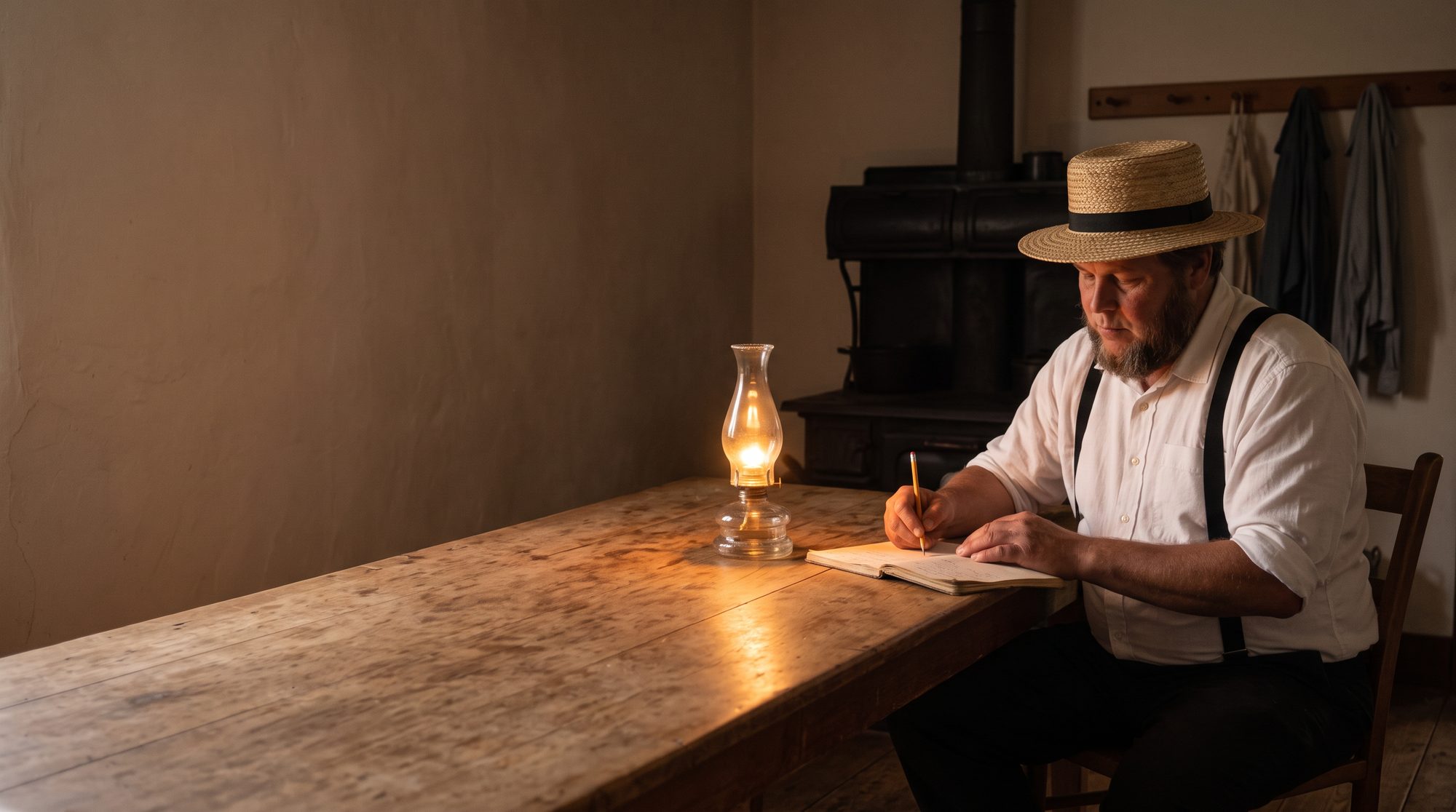
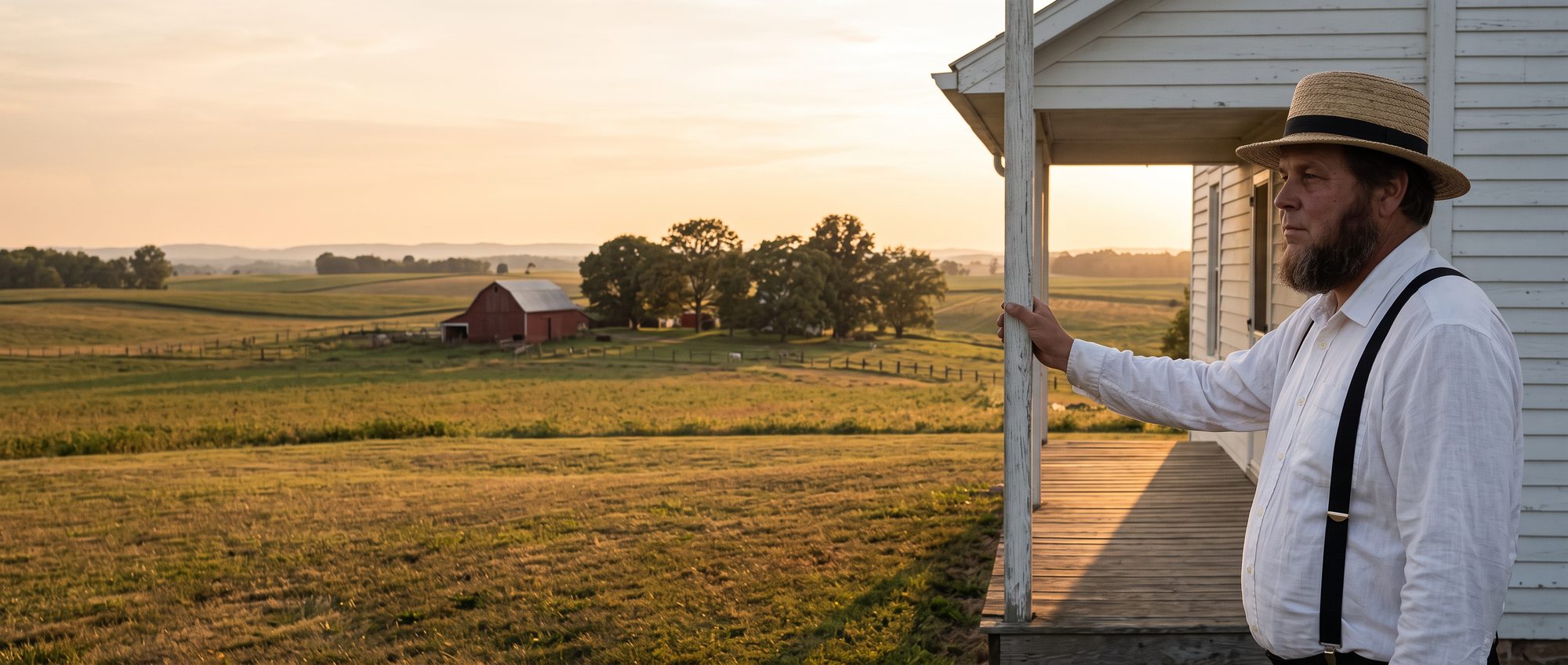
I am Jonas Byler. I am Amish, and I farm the same ground my grandfather farmed.
There is no electric line to our house. We cook on a wood stove, keep things cold in the milk house over the spring, and store our food in the root cellar. Most of what I know, I learned working beside my father and my grandparents, and almost none of it was ever written down.
So I wrote it down. Not for a farm like mine, but for the house you live in: your windows, your cellar, your kitchen and your yard. Every way in this book has its steps, the reason behind each step, and what it will not do, said plainly.
You do not need to be Amish to use any of it. You need a little time, and the things most houses already have.
Inside the book
Nine parts and about 100 numbered ways. Pick the ones that fit your house and your budget; you do not have to do them all.
Every way in the book has the same six parts
Part 1 · about 14 ways*
Keep the warmth you already pay for.
Sealing the drafts: $80 to $125 a year back*
Part 2 · about 10 ways*
A cooler, drier house without running a machine harder.
Part 3 · about 12 ways*
Close the doors they use, and keep them out for good.
Part 4 · about 12 ways*
Four plain things in place of a cupboard of bottles.
Part 5 · about 10 ways*
Clean clothes for less, and clothes that last.
The line, half the loads: $10 to $45 a year back*
Part 6 · about 9 ways*
Buy it once, and keep it for life.
Part 7 · about 10 ways*
A yard that asks less of you and of your wallet.
Part 8 · about 13 ways*
Stop paying for water that leaks and heat that waits in the tank.
Leaks and the water heater: $100 to $160 a year back*
Part 9 · about 10 ways*
Food that keeps, so less goes in the bin.
…and about 60 more ways, each with the same six parts.
* Planned contents: the counts, the titles and what each costs to start are settled when the book is written. The yearly figures come from "The math" above.
PDF · large print · 7-day refund
Look inside
Two sample spreads, laid out the way the book is: a part opener, then one way from start to finish.
A house loses its warmth in small places, and most of them you cannot see. This part finds them one at a time, and closes them with things from any hardware store, or from your own drawers.
You turn the heat up, and the room still feels cold down at the floor and over by the windows.
A strip of tissue paper or a light ribbon, about as long as your hand. A pencil. Nothing to buy.
Warm air leaks out and cold air pushes in at the very same gaps. Your hand cannot feel a small draft, but a strip of tissue moves at the slightest air.
It finds the leaks. It does not close them. The next four ways do that.
Use a strip of paper, never a lit candle or a match. A flame held near a curtain is how a house fire starts.
What folks write under the videos
Questions
It is a PDF book. It opens on your phone, tablet or computer a minute after you pay, and you can print any page you want to keep in the kitchen drawer.
No. Every way in the book is written for an ordinary house in town or country. Where a way only suits a farm, the book says so.
Each way carries its own caution at the step where your hands do the work. Follow the label on anything you buy, test a hidden spot first, never mix cleaners, and keep a carbon monoxide alarm in any house that burns fuel.
Straight after checkout the download opens, and the same link comes to your email so you can download it again later. If a link ever stops working, write to us and we send a fresh one. There is no account to make and nothing ships.
Write back to the delivery email within 7 days and you get your money back in full.
Before you go
A small thank-you for reading this far. Lift the seal to see your code.